Reference document · not legal or tax advice
Detailed reference for Hainan and Yazhou Bay OPCs
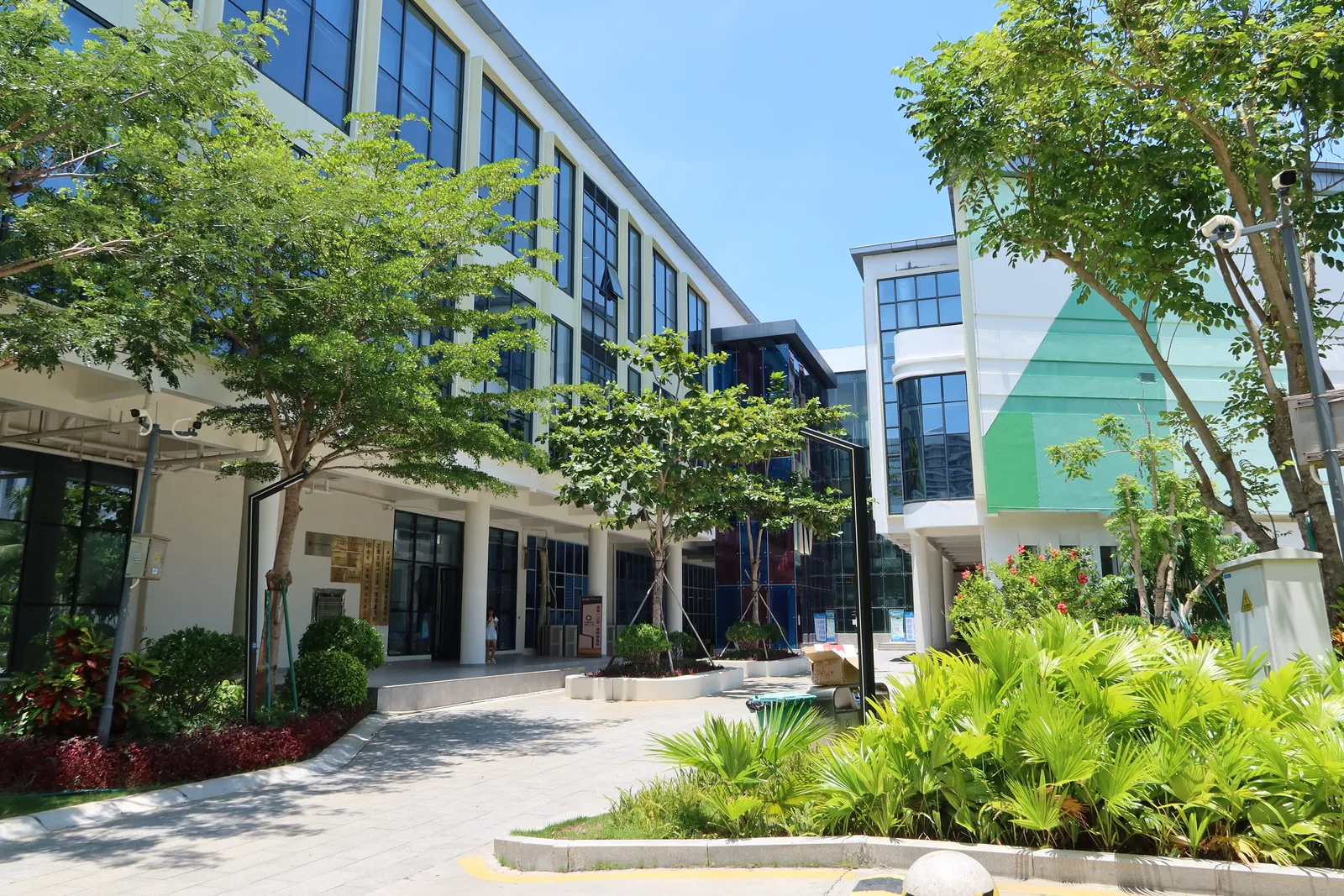
For foreign founders considering an AI-native one-person company (OPC, 一人公司) in the Hainan Free Trade Port, with particular emphasis on Sanya's Yazhou Bay Science and Technology City. This document covers what an OPC legally is; advantages of Hainan and Yazhou Bay; how to get lawful status; what regular and special funding may be available; and specifics on the physical and service infrastructure.
Section A
What is an OPC, and why is China encouraging this model?
The legal form, the AI-native definition regulators now use, and the national policy wave behind it.
A.1 — The legal form: a real company, not a sole proprietorship
An OPC (一人公司 / 一人有限责任公司) is a registered limited-liability company with a single shareholder, formed under the Company Law. It is not a sole proprietorship, and it is not an 个体工商户 (individual industrial and commercial household), which has no legal-person status and carries unlimited personal liability. The distinction matters because an OPC's shareholder liability is capped at subscribed capital.[1]
A.2 — What "OPC" means in the AI era
Chinese regulators now use "OPC" to mean specifically an AI-native micro-enterprise: typically one founder, occasionally a small team capped at around five people, using AI tools and agents to run product, marketing, delivery, and customer service without hiring a large staff. The NDRC's May 2026 feature article frames this as a distinct policy category, different from a conventional small company.[1][2]
A.3 — The national policy wave
As of April 2026, more than 20 cities had issued dedicated OPC support policies, and OPC appears in multiple provinces' 2026–2030 five-year plans — explicitly in Shanghai ("build an OPC innovation ecosystem") and Jiangsu, where Suzhou has been designated an "OPC entrepreneurial city."[1]
The umbrella policy is the State Council's August 2025 Opinion on Deeply Implementing the "AI+" Action, which city and provincial OPC measures cite as their basis.[11]
A March 2026 SAMR research report found OPC activity concentrated in the Yangtze and Pearl River Deltas, Beijing-Tianjin-Hebei, and selected western and central cities, with founders skewing younger. The same report flagged two risks worth knowing: policy homogeneity — cities competing mainly on cash and free space — and "hollow" OPC communities chasing registered headcount rather than real businesses.[1]
A.4 — How different cities approach OPC support
Support packages vary widely. Beijing's Haidian/Zhongguancun community offers a one-time ¥100,000 start-up grant and a streamlined four-department licensing process. Shanghai's Lin-gang "Zero Boundary Cube" is reportedly at full occupancy. Shenzhen runs a dedicated OPC registration portal. Hangzhou has taken a regulatory-sandbox approach (杭市监〔2026〕43号). Ningbo offers entrepreneurship insurance: up to ¥20,000 in base compensation plus a ¥40,000 job-creation subsidy if a first-time OPC founder's venture fails.[1]
These are illustrations of the policy landscape, not offers. Most city-level measures are competitive and periodically revised.
Section B
Why Hainan, and why Yazhou Bay?
The Free Trade Port's tax and entry advantages, Hainan's provincial OPC measures, and the specific Yazhou Bay community.
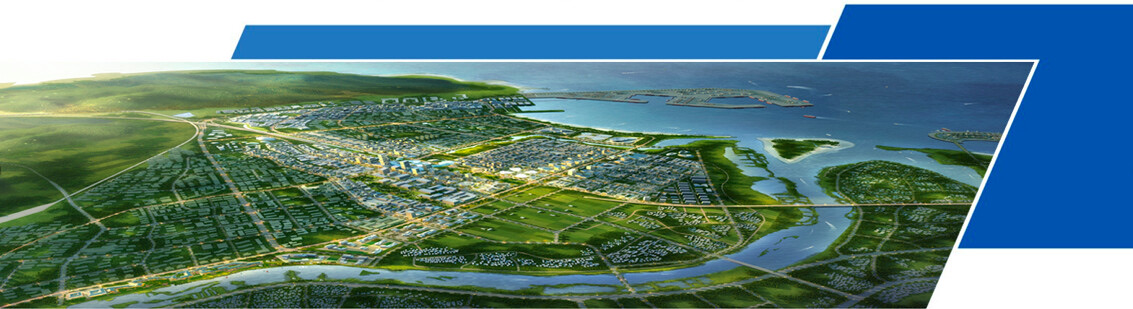
B.1 — Hainan Free Trade Port: the structural baseline
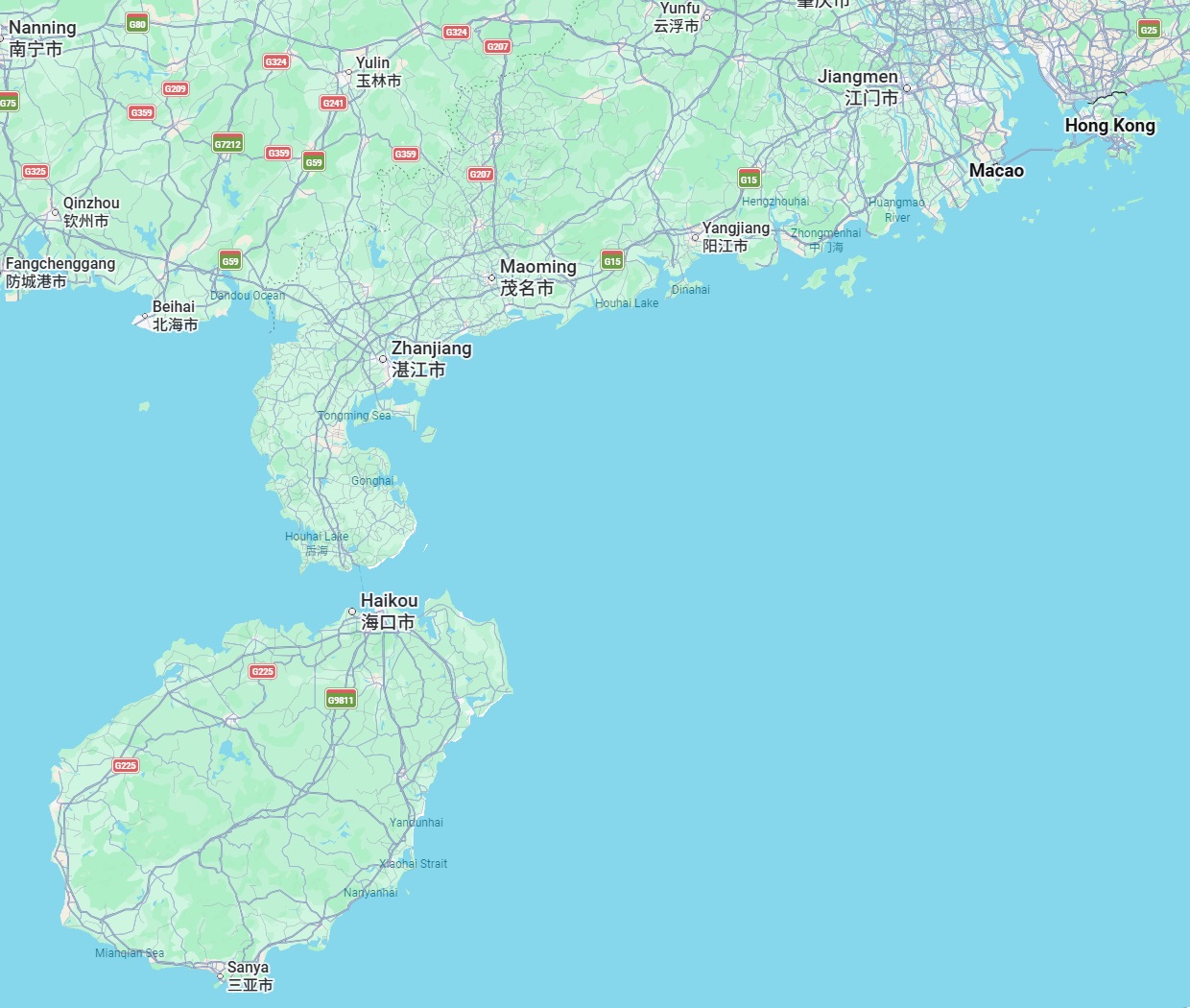
Yazhou Bay sits inside the Hainan Free Trade Port, which gives it a different legal and tax baseline from the rest of China. The FTP was established by the Overall Plan for the Construction of Hainan Free Trade Port in June 2020, and the Hainan Free Trade Port Law took effect in June 2021, granting the province a degree of legislative autonomy and a mandate for trade, investment, capital-flow, and people-movement liberalisation.[3]
The practical headline features for a founder are zero tariffs on a defined list of imported goods, a reduced 15% corporate income tax rate for qualifying enterprises, a 15% cap on the personal income tax burden for qualifying talent, a simplified tax system, and free-trade (EF) accounts that hold domestic and foreign currencies together.[3]
B.2 — The "double 15%" tax incentive
Under 财税〔2020〕31号 (Ministry of Finance and State Taxation Administration) and companion individual-income-tax rules, two rates matter:
- Corporate income tax. Enterprises substantively operating in Hainan FTP and falling within the FTP's Encouraged Industry Catalogue pay a reduced 15% CIT, versus the standard 25%.
- Individual income tax. For talent in the "high-end and urgently needed" category — a defined status, not automatic for every foreign hire — the portion of actual IIT burden above 15% is exempted. Eligibility requires at least 183 days of physical presence in Hainan FTP per tax year, with reasonable off-island business travel counted.
Both incentives have been extended through 31 December 2027.[16]
B.3 — Hainan's 30-day visa-free entry, and what it excludes
Nationals of an expanding list of countries — 51 as of the February 2024 expansion, with further additions since, including Kyrgyzstan and Vietnam in August 2026 — may enter Hainan visa-free for up to 30 days. Permitted purposes include tourism, trade and business, visits, family reunion, medical treatment, exhibitions and conferences, and sports.[15]
Important
Work and study are explicitly excluded from the visa-free regime. Visa-free entry can be used to scout, negotiate, and meet partners, but a proper work permit and residence permit are required to operate a company and draw income locally. See Section C.
B.4 — Hainan's provincial OPC measures (琼工信规〔2026〕3号)
《海南省支持人工智能OPC创新发展的若干措施》, document number 琼工信规〔2026〕3号, was issued on 15 May 2026 and took effect on 20 June 2026. It runs through 31 December 2028. The issuing bodies are the Hainan Provincial Department of Industry and Information Technology, jointly with the Provincial Development and Reform Commission, the Provincial Department of Finance, and the Provincial Talent Development Bureau.[10]
The measures define an AI OPC as a micro-enterprise of generally no more than five people that develops or applies AI tools to run its business. Provincial targets are approximately three quality "OPC ecosystem communities" in 2026, rising to more than ten quality communities, more than one hundred quality OPC enterprises, and more than one thousand OPC innovation talents by 2028, under a "one core, multiple poles, multi-point linkage" spatial layout.[10]
The ¥8M community award is not a founder grant
The province evaluates and selects one to three top OPC communities per year for a one-time award of up to ¥8,000,000 from provincial finance. That money goes to the community operator, not to individual founders. Community operators and local governments are encouraged to pass savings downstream through "smart" vouchers that reduce compute, model, corpus, and AI-tool costs, but there is no automatic entitlement for any individual founder.
Yazhou Bay is a plausible contender for one of these awards but is not guaranteed to receive one. Most applicants for the available community-level funding will not receive much. Treat the ¥8M figure as a policy signal about provincial priorities, not as money you can apply for.
Community minimum size is 3,000 m². The measures also encourage counties and parks to draw on Hainan FTP investment funds — the FTP Construction Investment Fund and the FTP Innovation Investment Fund — for OPC financing, and invoke the "double 15%" tax incentive as a recruitment draw.[10]
B.5 — Hainan's local OPC communities in practice
Chengmai County. Hosts Hainan FTP's first dedicated OPC startup community, at Laocheng Science and Technology New Town, inside Hainan Ecological Software Park. By mid-2026 it reportedly hosted more than 300 OPC enterprises. A separate "rural maker OPC" pilot launched in Chengmai in August 2026 targets AI-enabled agriculture, cross-border e-commerce, coffee and culture, and wellness tourism.[1]
Lingshui Li'an. Hainan's first "digital-nomad OPC" headquarters community, pitched explicitly at international remote workers and digital nomads. It is deliberately positioned differently from Sanya's more industry-vertical focus.[1]
B.6 — The Yazhou Bay OPC community
Yazhou Bay Science City operates an OPC community out of its Technology Enterprise Incubation Center. The community provides roughly 7,023 m² of low-cost entrepreneurial space, up to twelve months of discounted rent and support-service fees for new entrants, access to privately deployed major models (Zhipu, DeepSeek) on an in-house compute pool reported at 193.6 PFlops, 6,563 talent-housing units plus developer housing stock, and algorithm and R&D subsidies reported up to ¥1,000,000.[1][18]
Named target industries are the seed industry (南繁), deep-sea technology, biomedicine, the low-altitude economy, and livestream and e-commerce operations — a reflection of the Science City's existing specialisations rather than a generic "any AI app" community. A global recruitment call frames three tracks: cross-border digital services, AI creative content, and southern seed-industry and agricultural digitalisation.[1][18]
Compared with Lingshui, which markets itself to digital nomads, Yazhou Bay's OPC pitch is more about plugging into existing hard-science verticals. That distinction matters if the business model is closer to "solo AI operator" than to "deep-tech spinout."
Section C
Getting lawful status: company form, work permits, residency
Choosing a corporate vehicle, the work-permit categories, the Sanya procedural pathway, and the documented fast-track at Yazhou Bay.
C.1 — Choosing a corporate vehicle
A foreign founder normally sets up a Wholly Foreign-Owned Enterprise (WFOE) or a joint venture under the Foreign Investment Law (2020), screened against the national Special Administrative Measures for Foreign Investment Access — the negative list jointly issued by NDRC and MOFCOM and revised periodically. The 2024 edition further trimmed manufacturing-sector restrictions.[1]
Hainan has its own FTP foreign-investment negative list, first issued in 2020 and revised since. NDRC itself describes it as the shortest foreign-investment negative list in China. Outside the listed restricted sectors, foreign investment in Hainan is filing-based rather than approval-based. Hainan has also been separately trimming its cross-border services-trade negative list.[1]
Practical note
An OPC is a Company-Law entity, so a foreign founder wanting a single-shareholder AI-native micro-enterprise will typically be looking at a WFOE structured as a one-person limited liability company. "OPC" is a policy-marketing term as much as a formal legal category, so confirm the specific registration category with the Sanya market-regulation window or a licensed agent before filing.
C.2 — Foreign work permits: the national A/B/C framework
China's national system, run under the State Administration of Foreign Experts Affairs framework and the 2017 Notice on Comprehensively Implementing the Work Permit System for Foreigners Coming to China, sorts foreign workers into three classes.[1]
| Class | Who | Conditions and scrutiny |
|---|---|---|
| A | High-end talent: scientists, technology leaders, international entrepreneurs, special-skilled talent | Lightest scrutiny; permits up to five years; no age, education, or work-experience limits |
| B | Professional talent: bachelor's or above, plus two or more years of relevant experience; points-based | Salary-floor tests apply, typically around four times the local average wage, varying by city; age normally capped at 60, relaxable |
| C | General: meets domestic labour-market demand and complies with national policy | Salary-floor tests apply, typically around six times the local average wage, varying by city |
The salary-floor multiples are being tightened in 2026 across several jurisdictions, so treat them as a snapshot rather than a constant. The relevant visa categories for founders are the Z visa (standard work visa, converted to a residence permit on arrival), the R visa (fast-track for recognised high-end or urgently needed talent), and investor or entrepreneur residence permits, where the commonly cited threshold is a real investment of ¥2 million or more within three years. That threshold is a general guideline and varies by province and zone, so confirm it with a local immigration specialist.[1]
Permanent residence — the "Chinese green card" — is a separate and harder status, administered by the National Immigration Administration. Talent, investment, and family-reunion tracks exist, but approval volumes remain low relative to demand. It is worth a specialist consultation rather than a self-service attempt.[1]
C.3 — The Sanya procedural pathway for a foreign work permit
The Sanya Municipal Government Service Center publishes an official guide, Domestic Application for Work Permit for Foreigners in China (More Than 90 Days, Excluding 90 Days), in Chinese, English, Russian, and Korean.[5]
Who decides
- Issuing authorities: Sanya Administrative Approval Bureau; Sanya Science and Technology Industry Information Bureau
- Legal basis: Exit and Entry Administration Law, Article 41; State Council Order No. 637 (Articles 7(9), 16); State Council Decree No. 412; 2015 No. 95; 2017 No. 36
Application conditions
Employer side:
- Lawfully established, no serious violations, no dishonest record
- The position has a special need with domestic shortage
- Does not violate national restrictions on the position
- Salary at or above the local minimum wage
- Pre-approval from the industry regulator where required
Applicant side:
- At least 18 years old, in good health, no criminal record
- Has a definite employer in China
- Possesses the necessary professional skills or commensurate knowledge
- Work aligns with China's economic and social development needs
Grounds for refusal
- Incomplete materials
- Materials that do not meet requirements
- False materials
- Applicant does not meet the working conditions
- Other circumstances not suitable for issuing a work permit
Required materials
- Foreigner's work permit application form
- Proof of relevant work experience
- Highest degree or education certificate, or relevant approval document, or professional qualification certificate
- Certificate of no criminal record
- Medical certificate
- Employment contract or certificate of employment, including multinational company assignment letters
- Information page and electronic photo of the applicant's passport or international travel document
- Applicant's visa or valid residence permit
Items 1–8 require one electronic copy plus the paper original; items 2–8 additionally require a copy where noted.
Procedure, timing, cost
| Step | Detail |
|---|---|
| Procedure | Acceptance → Review → Approval → Settlement, with pre-review through decision |
| Processing time | Seven working days |
| Fee | None |
| Online approval | Yes, via fwp.safea.gov.cn (also reachable via 12333.gov.cn) |
| Consultation | 0898-38860176 / 0898-38221960 |
| Complaints | 0898-12345 |
The 12345 line includes a dedicated administrative-approval seat with pre-review and evaluation services. Press 2 for multilingual support.
C.4 — The documented fast-track at Yazhou Bay
Yazhou Bay's High-Tech Zone service center runs a combined work-permit and residence-permit processing service (两证联办). In a documented case, a Belarusian entrepreneur who set up a food import-export company in the zone had both permits issued within fifteen days, through a single coordinated process rather than two sequential agency applications.[19]
The service center offers pre-review of application materials, in-person interviews to verify business plans and intent, and post-approval workplace verification. A multilingual expert service pool covers English, Spanish, French, Italian, Korean, and Japanese. An all-in-one service layer also covers company registration, licensing, hiring, policy consultation, social-insurance coordination, and ongoing operational support.[19]
The fifteen-day figure is a documented case, not a published service-level commitment.
C.5 — Hainan's three-year plan for foreign-related services
Hainan issued a Three-Year Action Plan to Optimize Foreign-Related Services and Upgrade the Internationalized Business Environment on 8 April 2026, containing 30 measures and 80 implementation items. Highlights relevant to a foreign founder include online passport-based identity verification for foreign natural persons, streamlined foreign enterprise registration, simplified notarisation and authentication, authorisation for Hong Kong notaries to assist with mainland registration and authentication, a Hainan enterprise-registration window extended into Hong Kong itself, an upgraded foreign enterprise liaison officer system, a planned Hong Kong branch of the Hainan International Arbitration Center, and cultivation of more than twenty foreign-related legal service institutions.[14]
A companion work plan issued on 6 April 2026 adds cost-reduction measures for land, electricity, and logistics, recruitment of foreign-invested hospitals, expanded financial-sector opening, EF account policy optimisation, and deepened cross-border investment and financing FX reform.[14]
Section D
Funding: what is available, and on what terms
Talent incentive tiers, rent reductions, IP-backed loans, and the critical caveats about competitive versus automatic support.
Read this before the numbers
Almost every figure below is competitive, capped, and periodically reviewed — not an automatic payout. The policies use selection language: "evaluate and select one to three communities per year," "high-level talent" categories with annual assessments, and so on. Be skeptical of any intermediary promising a guaranteed subsidy.
D.1 — General talent aggregation measures
The current instrument is 三科技城规〔2025〕3号, Further Measures to Accelerate Talent Aggregation in Sanya Yazhou Bay Science and Technology City, effective 6 June 2025. It explicitly replaces its 2024 predecessor.[2]
| Item | Amount or detail |
|---|---|
| Settlement reward (落户奖励) | ¥6,000–15,000, split 50% after three months of social insurance and 50% after seven months |
| Employment and self-employment reward (就业及自主创业奖励) | ¥4,800–12,000, being 80% of the settlement standard, paid after seven months of social insurance |
| Skills upgrade reward (职业技能提升奖励) | ¥500–5,000 for new certificates or titles |
| Internship subsidies (实习补贴) | ¥800–2,000 per month per intern, capped at six months |
| Discounted rental apartments (租赁公寓) | 30% rent discount for up to three years, across eleven projects and 3,254 units |
Why this matters for an OPC founder
The definition of 自主创业 (self-employment or startup) in the current measures explicitly includes a company shareholder serving as legal representative, and a partnership enterprise executive partner. That is directly relevant to an OPC structured as a one-shareholder limited-liability company.
D.2 — High-level talent recognition and reward
The current instrument is 三科技城规〔2025〕2号, Measures for the Recognition and Reward of High-Level Talent of Sanya Yazhou Bay Science and Technology City, issued 6 May 2025 and effective 6 June 2025. It explicitly repeals its 2024 predecessor. This is the document that created the A–F reward table that also appears in the Yazhou Bay investment brochure.[9]
| Class | Total reward | Vesting |
|---|---|---|
| A | ¥4,000,000 | Five equal annual installments, each after twelve months of service and a successful assessment |
| B | ¥3,200,000 | |
| C | ¥2,400,000 | |
| D | ¥1,200,000 | |
| E | ¥400,000 | |
| F | ¥200,000 |
The 2022 edition of the same measures had D-class at ¥1,600,000. The 2025 figure is ¥1,200,000. Cite the 2025 number as current.
E and F class talent can additionally apply for an affordable-housing purchase subsidy: ¥400,000 (E) or ¥200,000 (F). The first installment is ¥100,000 (E) or ¥50,000 (F) on filing the purchase contract, with the remainder paid in five equal annual installments.
Age caps
A and B: up to 70. C: up to 60. D: up to 50. E and F: up to 45, extendable to 50 for medical or basic-education roles.
Eligibility notes
- The measures do not restrict nationality or household registration, so foreign founders are eligible in principle.
- The employer must be substantively operating in the Science City, in a sector matching the Industrial Development Catalogue, ordinarily with more than 100 m² of leased or self-used office space and at least five full-time employees working there.
- Alternatively, the employer may meet one of several financial or substantive thresholds: annual tax of ¥500,000 or more; annual R&D of ¥1,000,000 or more with at least five full-time R&D staff and at least two at master's level or above; agricultural revenue of ¥5,000,000 or more; cumulative venture capital of ¥5,000,000 or more within three years; cumulative spend of ¥1,000,000 or more in one year on instruments or office renovation; or, for startups less than one year old, at least one authorised invention patent or provincial-level new variety together with paid-in capital of ¥1,000,000 or more.
- Physical presence of at least 183 working days per year in the Science City.
- The reward cannot be stacked with Hainan provincial housing-preference policies or A/B/C talent-apartment policies, but can be combined with Sanya municipal rental or purchase subsidies, or with Science City affordable-housing policy.
- Special or urgent talent may be handled outside the standard grid on a case-by-case basis (一事一议).
One item to confirm locally
The employer-side eligibility gate in the 2025 measures has not been compared clause by clause against the 2022 text. If a company structure turns on the 100 m² / five-employee test, or on the startup carve-out (one patent plus ¥1,000,000 paid-in capital), confirm the current wording directly with the Yazhou Bay Administration Bureau before relying on it.
D.3 — Rent reductions and incubator rewards
The Yazhou Bay Technology Enterprise Incubation Center provides up to twenty-four months of rent reduction for qualifying enterprises.[4]
For the incubator operator rather than the founder, the 2025 ecosystem service materials list recognition and post-operation rewards at Science City, Sanya municipal, Hainan provincial, and national levels — for example, ¥400,000 to ¥1,000,000 for Science City–level recognition and ¥1,000,000 to ¥2,000,000 for provincial or national recognition.[6]
D.4 — IP-backed financing: the 崖知贷 product
The Yazhou Bay Administration Bureau operates a dedicated IP pledge loan service called 崖知贷 (Ya Zhi Dai), made up of three parts: guarantee, interest subsidy, and IP professional services.[7]
- A guarantee fee of 0.1% per year
- An interest subsidy covering 80% of actual loan interest paid, capped at ¥150,000 per entity per year
- Full-process IP pledge financing services, including demand matching and registration assistance
The guarantee runs through a park guarantee-loan mechanism, so the enterprise does not need to pledge real estate or other assets to the partner bank. The service team is known as 知小二. Hotlines are 0898-88839009 and 0898-88033839. The service window is at the Yazhou Bay IP Comprehensive Service Hub, Yonyou Industrial Park, Building 1, ground-floor lobby.[7]
D.5 — What is not available to an individual founder
- The Hainan ¥8M OPC community award under 琼工信规〔2026〕3号 is a community-operator award, not a founder grant.
- Visa-free entry for thirty days does not permit work or study.
- Permanent residence is a separate and harder status with low approval volumes relative to demand.
- Incubator recognition rewards go to the incubator operator, not to the founder.
Section E
Day-to-day infrastructure: space, services, amenities
Office and industrial space, research and procurement platforms, the service ecosystem, and the organisational map of who runs what.
E.1 — Office and industrial space options
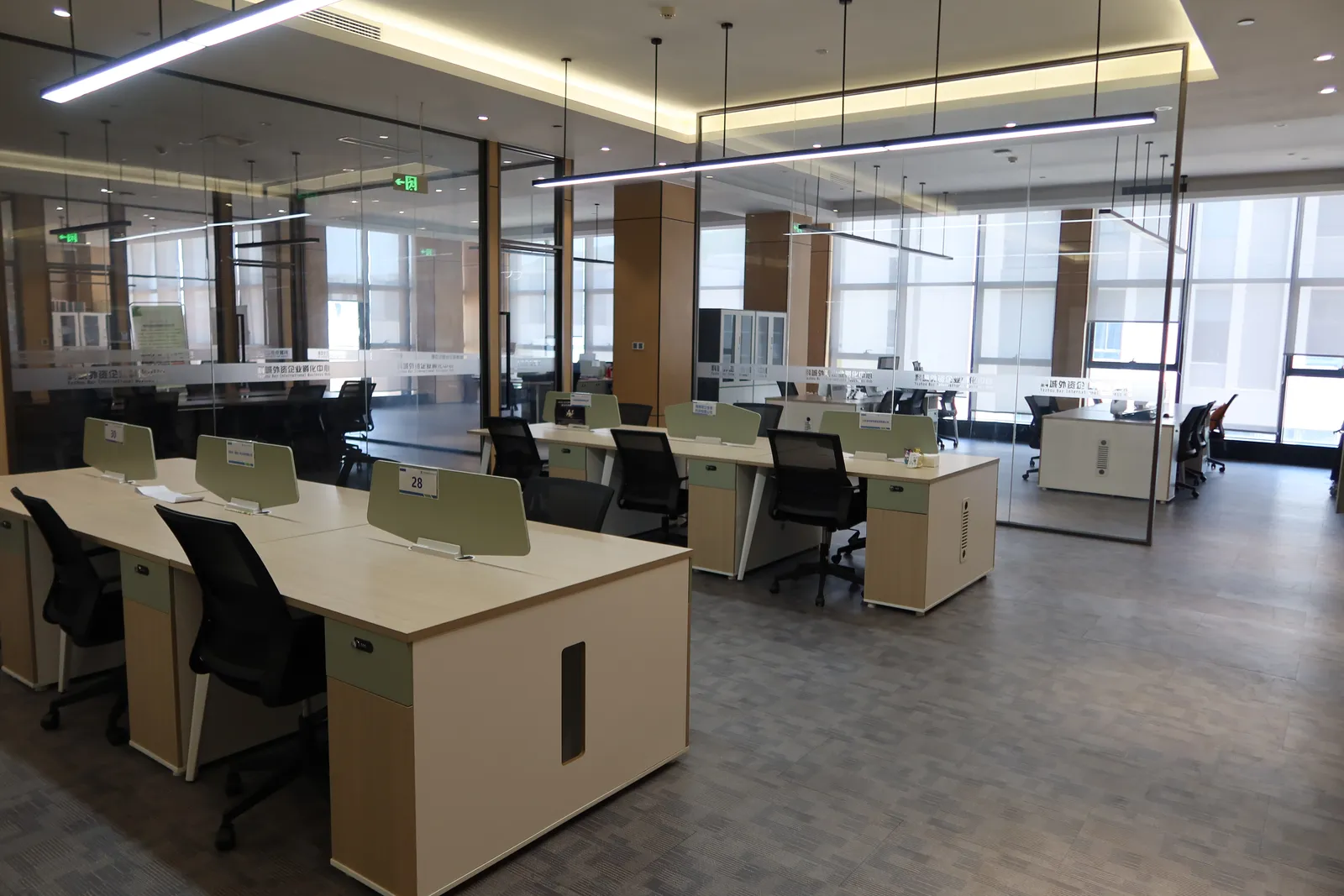
Yazhou Bay offers carrier types from independent offices to large industrial floors. The Technology Enterprise Incubation Center's operating area is roughly 200,000 m², across independent offices, standalone offices, industrial factories, and open workstations.[4][3]
| Park or building | Unit size |
|---|---|
| Yabulun Industrial Park | 30–300 m² |
| Baitai Industrial Park | 50–300 m² |
| Ruize Office Building | 50–300 m² |
| UFIDA Industrial Park | Open workstation |
| Wutong Courtyard | 1,400 m² |
| Poly Qingye Building No. 5 | 50–100 m² |
| China Merchants Free Trade Zone Building B | 50–1,000 m² |
| Cultural and Creative Industrial Park | 50–1,000 m² |
| Dalong E-Smart Valley Industrial Park | 800–6,700 m² |
| Yazhou Bay Intelligent Manufacturing Innovation Park | 1,700–15,000 m² |
The Smart Manufacturing Innovation Park offers 500 to 18,000 m² of flexible multi-story factory space, with floor heights up to 10 m, load-bearing capacity up to 2 t/m², power distribution up to 200 W/m² on dual circuits, column spacing up to 20 m, lease terms of 30 years or more, and Class C fire rating with sprinkler coverage. It includes a supermarket, canteen, parking, and an energy station. Office carrier consultation is available on 0898-88820660 ext. 8777.[7]
E.2 — Research and procurement platforms
CAS Smart (喀斯玛) Comprehensive Scientific Research Service Platform. Jointly developed by the Sanya Yazhou Bay Innovation Development Center and CAS Smart, and launched in December 2024, the platform provides one-stop procurement of reagents, consumables, and instruments for Nanfan and deep-sea research, with terminal warehousing and logistics, lab procurement packaging, and a simplified settlement system. It uses "shopping cart direct purchase" and "online bidding and inquiry" models. The portal is at mall.yazhou-bay.com. Contacts are Mr. Zhao on 13278979989 and Mr. Li on 13208929076. The physical warehouse is at Sanya Yazhou Bay Smart Manufacturing Innovation Park.[7]
Deep Sea Technology Innovation Public Platform. A provincial and municipal key project of roughly 124 mu, with total investment of about ¥4.2 billion. It aggregates six top marine universities and research institutes including Shanghai Jiao Tong, Zhejiang, Ocean University of China, and Wuhan University of Technology. Equipment includes five major international advanced test pools — acoustic wave guide, wave-current, deep-sea equipment, supergravity centrifuge — with roughly ¥2 billion in research instruments.[7]
Global Animal and Plant Germplasm Resource Introduction and Transit Base (Moon Island / 月亮岛). The core carrier for Hainan FTP's national Nanfan Silicon Valley strategy, including an Animal and Plant Quarantine Center with about ¥360 million invested, and an Animal and Plant Offshore Research Innovation Center with about ¥390 million invested. Services include import and export consulting, full-process isolation planting, and institutional integration innovation.[7]
E.3 — Who actually does what
Corporate services at the Science City are delivered by Sanya Science and Technology City Industrial Development and Enterprise Service Co., Ltd. (三亚科城产业发展与企业服务有限公司, "科城产发"), established on 1 April 2022 as a wholly owned subsidiary of the Yazhou Bay Holding Group.[6]
Service hotlines are 19589788125 and 0898-88836226. Office carrier consultation is on 0898-88820660 ext. 8777.
E.4 — Amenities and daily life
Sports and fitness: Science City Gym at Yabulun Industrial Park Building 7 (15:00–22:00), Building 2 (12:00–22:00), and Nanshan Chunyuan Talent Staff Home Building 2 (15:00–22:00); Citizen Fitness Center (07:00–12:00 and 19:00–22:00; badminton 07:00–12:00 and 13:00–22:00); lighted courts (06:30–22:00).
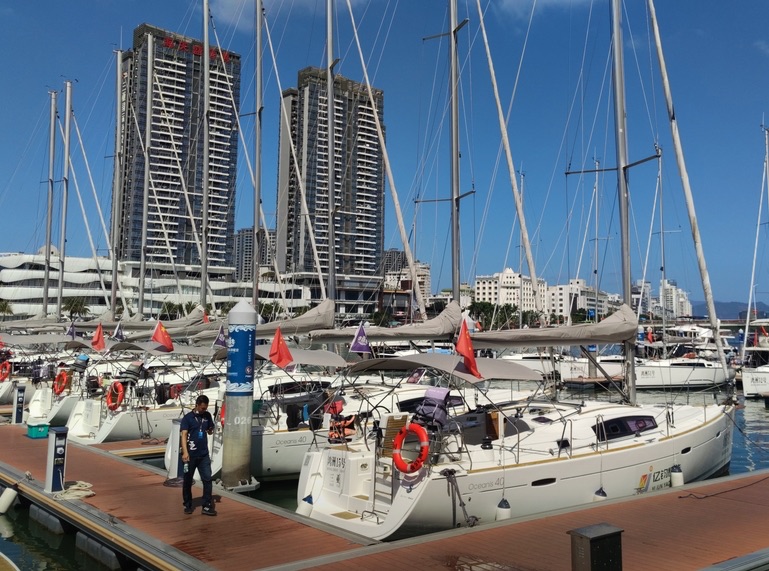
Culture: Culture Hall (08:30–22:00); Jiaomei Science Popularization Park (00:00–22:00, indoor museum 09:00–18:00); Zhaoshang Yongjian Community Cultural Activity Center (09:00–22:00); Binhai Bathing Beach (07:30–18:30); Yazhou Cultural and Sports Center Art Museum (09:00–19:00), Library (09:00–21:00, closed Mondays), Gymnasium (07:00–22:00), Culture Hall (09:00–19:00, subject to course schedule), Cinema (10:00–21:00, subject to film length); Xingyun Bookstore (09:00–22:00).
Commercial streets: Xinghai Party Night Market on Xindaogangwan No. 1 East (17:30–02:00); Shenhai Magic Commercial on Chuangye Street No. 2 (08:30–02:00); Yazhou Zhaoshang Garden Lane on Yumin Road No. 2 (10:00–22:00, Hema 08:30–22:00); Nanshan Chunyuan Commercial Street (10:00–22:00); Baitai Commercial Street at Baitai Biological Science Park Building 4, ground floor (10:00–02:00); Yanxuegu Commercial Street at the Yanxuegu dormitory area Building 7 (08:00–23:00).
Cinemas: Wanda Cinema at Yazhou Zhaoshang Garden Building 4 (10:00–02:00); China Film Yinxing at Shenhai Magic Commercial, third floor (14:00–01:00).
Farmers' market: Yazhou Bay Science City No. 1 Farmers' Market (07:00–19:00).
Education: Science City No. 1 Kindergarten Childcare Center; Sanya Huandao Experimental Primary School; Sanya Yazhou Bay Science City Nankai Primary School; Sanya Yazhou Bay Science City Shanghai Foreign Languages School, affiliated with the Shanghai World Foreign Language Education Group.
Medical: Yazhou Bay Science City General Hospital, trusted by Shanghai Ruijin Hospital and operating as a tertiary hospital; and the Hainan Jingwei Aviation Medical Emergency Station at the Yazhou Bay Science City First Aid Station.
Living: Affordable housing, talent apartments, a commercial complex, a citizen fitness center, a farmers' market, and a bathing beach.
Operating hours are as published at the time of collection. Verify locally before relying on them.

Appendix
Additional Yazhou Bay resources
Other items that matter to particular OPC profiles, especially deep-tech and seed-industry founders.
Apx.1 — Factory space and industrial land
The Sanya Yazhou Bay Smart Manufacturing Innovation Park offers 120,000 m² of factory space in 500 to 18,000 m² flexible multi-story units, and is described as scarce industrial land within the Science City. Construction standards include floor heights up to 10 m, load-bearing capacity up to 2 t/m², power distribution up to 200 W/m² on dual circuits, column spacing up to 20 m, lease terms of 30 years or more, and Class C fire rating with sprinkler coverage. Amenities include a supermarket, canteen, parking, and an energy station. Contacts are Mr. Liu on 15640228848 and Mr. Sun on 18589630043.[7]
Apx.2 — Research platforms and institutes
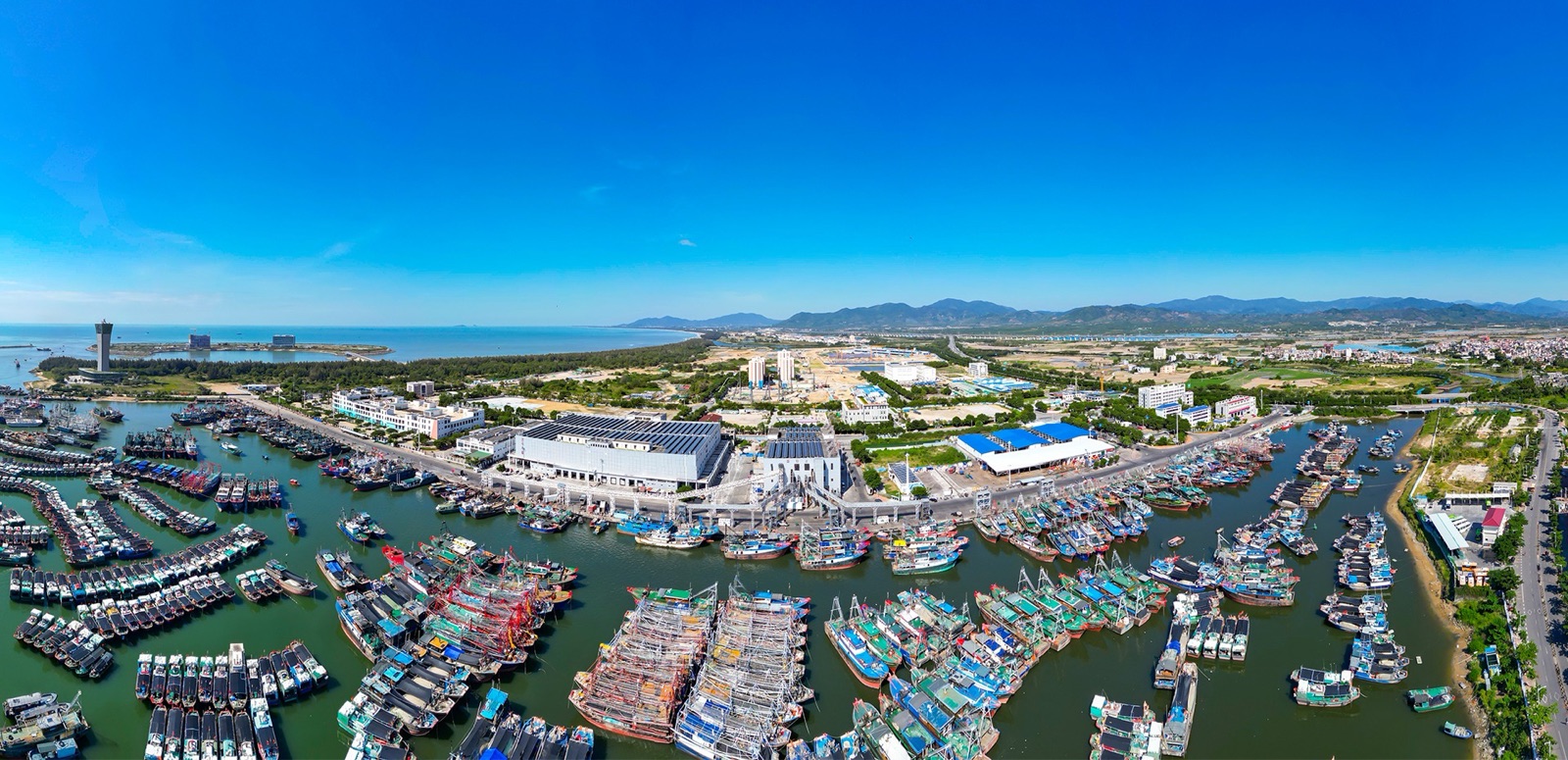
The Science City hosts 44 provincial-level research platforms, six national-level platforms, 21 research institutes, and ten academician workstations. The national-level platforms include the Yazhou Bay Laboratory, the National Key Laboratory for Tropical Crop Biological Breeding, the National Key Laboratory for Corn Biological Breeding, the National Saline-Alkali Rice Technology Innovation Center, the National Medical Engineering Key Laboratory, and the Deep Sea Science and Intelligent Technology National Key Laboratory. Research institutes include the Chinese Academy of Fishery Sciences Hainan Innovation Research Institute, the Chinese Academy of Tropical Agricultural Sciences Sanya Research Institute, and the Sanya Customs Inspection and Quarantine Technology Center Biological Safety Laboratory.[3][6]
Apx.3 — The four pillar industries
These are the sectors that the Science City treats as its core, and they matter for aligning with the Industrial Development Catalogue that the talent-reward measures reference.
- Nanfan seed industry (南繁种业). Crop foundation research, variety innovation and breeding, seed CRO, variety evaluation, resource improvement, and smart agriculture. Representative enterprises include China National Seed Group headquarters, Guotou Seed Industry, Dabeinong, and China Agricultural University Gene.
- Deep sea technology (深海科技). Deep-sea entry, exploration, and development; deep-sea high-end equipment, scientific research services, energy development, and deep-sea fisheries. Representative enterprises include China State Shipbuilding Corporation, China Merchants Group, Harbin Electric Corporation, Mingyang Smart Energy, and Boya Engineering.
- Life science (生命科学). Marine drugs, medical devices, medical aesthetics and health, scientific instruments, testing, and ecological services. The cluster includes 54 or more life-science enterprises and 19 public R&D platforms built or under construction, including the Deep Sea Compound Resource Center and the national non-human primate germplasm and model R&D center.
- Digital economy (数字经济). Information technology integrated with traditional industries, and digital transformation of Nanfan, deep sea, and life science. Relies on the Hainan AI Computing Center, the China Copyright Protection Center Hainan Branch, and submarine cable landing stations. The stated goal is to build a data cross-border security and orderly-flow pilot zone.
Apx.4 — National Overseas Talent Offshore Innovation and Entrepreneurship Base
Sited at Yazhou Bay Science City, the base was proposed by the Hainan Provincial Science and Technology Association in September 2023 and formally approved by the China Association for Science and Technology in April 2024. It is a national-level designation intended to let overseas-based talent innovate and start companies with a Hainan or Yazhou anchor without necessarily relocating full-time.[17]
A separate Sanya "菁英人才" (elite talent) science-project fund has directly funded more than 198 joint Science City projects, with about ¥40 million from provincial finance, as of a 2024–2025 report.[17]
Apx.5 — Yabulun Industrial Park questionnaire
The printed materials include a Yabulun Industrial Park questionnaire QR code, described as long-term valid, for service-feedback purposes. Office carrier consultation is on 0898-88820660 ext. 8777.[7]
Bibliography
Sources
Numbered references. Confidence in each source is described in the entry itself where it matters.
- OPC-AI Policy and Foreign-founder Support — China, Hainan, and Sanya.
- Further Measures to Accelerate Talent Aggregation in Sanya Yazhou Bay Science and Technology City.
- Sanya Yazhou Bay Science and Technology City Investment Brochure.
- Introductory Guide to the Sanya Yazhou Bay Science and Technology City Corporate Training Center.
- Domestic Application for Work Permit for Foreigners in China (More Than 90 Days, Excluding 90 Days).
- Ecosystem Service Product Brochure.
- Yazhou Bay Science and Technology City operational and service materials.
- Measures for Rewarding the Introduction of Talent of Sanya Yazhou Bay Science and Technology City (2022 Revision).
- Measures for the Recognition and Reward of High-Level Talent of Sanya Yazhou Bay Science and Technology City, and related documents. sanya.gov.cn — regulatory documents
- Several Measures of Hainan Province to Support the Innovative Development of AI OPCs.
- Opinion on Deeply Implementing the "AI+" Action.
- NDRC feature article, "被写入多地'十五五'规划,OPC凭什么站上风口?"
- Trial Measures for Accelerating Talent Aggregation in Hainan FTP Sanya Yazhou Bay Science & Technology City.
- Hainan Three-Year Action Plan to Optimize Foreign-Related Services and Upgrade the Internationalized Business Environment, and companion 2026 business-environment work plan. gdeto.gov.hk (PDF)
- Hainan 30-day visa-free entry announcement. nia.gov.cn
- "Double 15%" tax policy documentation — 财税〔2020〕31号 and continuation notice. policy.mofcom.gov.cn · fgk.chinatax.gov.cn
- National Overseas Talent Offshore Innovation and Entrepreneurship Base (Sanya Yazhou Bay Science and Technology City) inaugurated. hq.news.cn
- Yazhou Bay OPC community recruitment materials. sanyakc.com/zsdt/212
- Yazhou Bay High-Tech Zone two-permit processing case. sanyakc.com/kjzh/133
- Sites to treat with caution.
Back matter
Notes
This material was gathered and examined by staff members, then analyzed and curated with assistance from DeepSeek AI.
Several hainan.gov.cn and sanya.gov.cn pages were unreachable during
research. Where that happened, the same document number, issuing department, and figures were
cross-checked across at least two independent reputable reprints before inclusion. Even so,
anyone engaging a licensed local agent or the issuing bureau's public hotline should confirm
the current text before relying on a specific number for a filing or a subsidy application.
Figures, dates, and eligibility conditions are current as of September 2026. Policy documents change, often without wide announcement. This document is not legal, tax, or immigration advice.